








3rd International Scientific Conference “Jazz XXI” | 21-22.10.2026
Organizer’s Welcome | Programme | Concert | Abstracts | Speakers
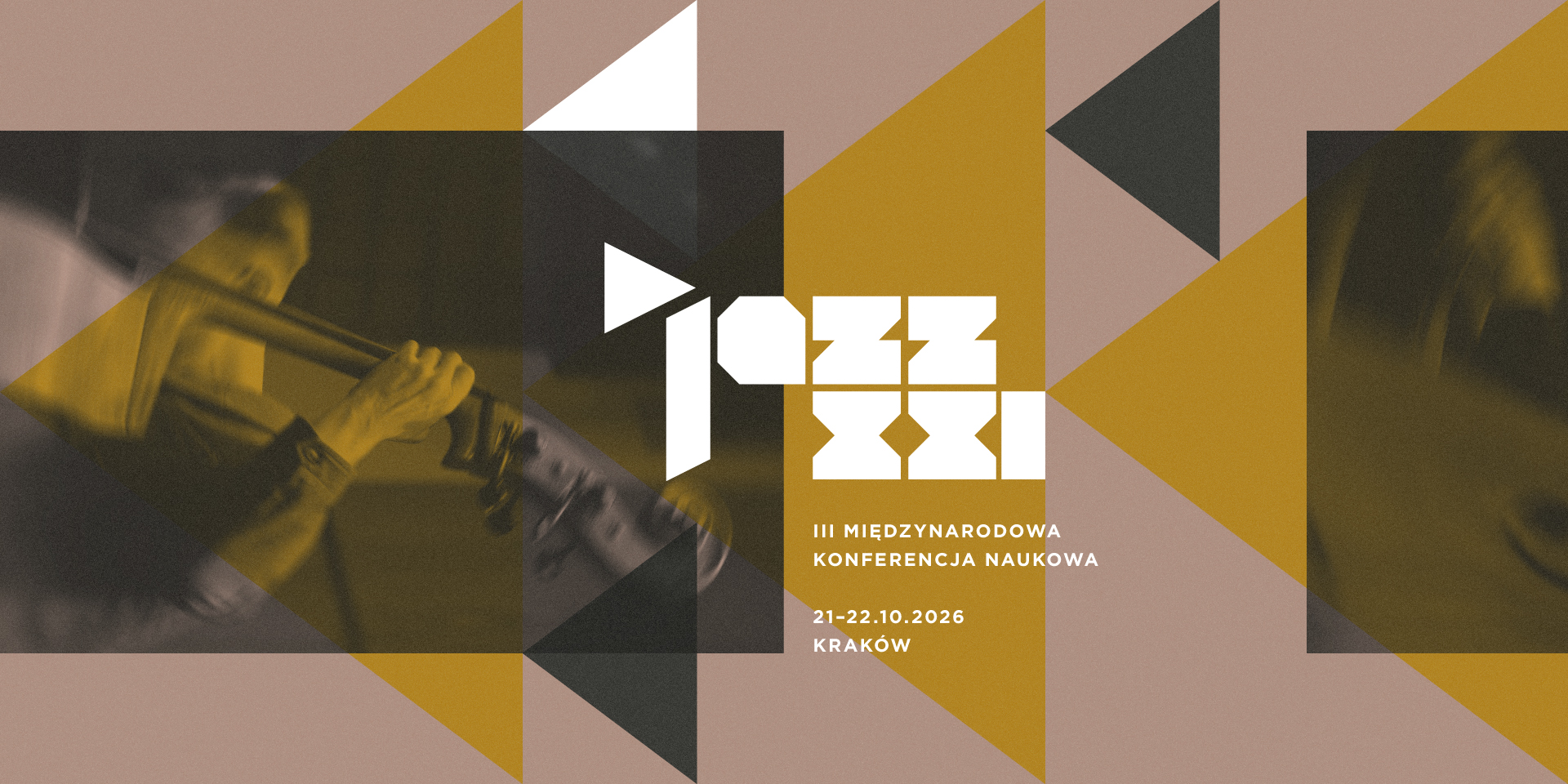
The Jazz Department of the Krzysztof Penderecki Academy of Music in Kraków is organising the 3rd International Academic Conference ‘Jazz XXI’ on 21–22 October 2026. We invite you to attend the academic sessions, the concert, and also accompanying painting exhibition.
Admission to all events is free.
Coordination:
dr Marcin Banaszek, dr hab. Marcin Ślusarczyk, prof. AMKP
Conference Partner:
City of Kraków
Organizer’s Welcome
Dear Conference Participants,
This year’s International Scientific Conference JAZZ XXI constitutes a continuation of the two previous editions, held in 2018 and 2022. During these important events for our jazz community, we had the privilege of welcoming a distinguished group of representatives of academic institutions from Poland and abroad. Their substantial scholarly contributions were reflected in two post-conference publications documenting the intellectual and academic output of both events.
From a historical perspective, jazz cannot be regarded solely as a musical phenomenon, as the genre has, from its very origins, been deeply rooted not only in the social and cultural spheres, but also in technological and commercial contexts. This becomes particularly evident in the contemporary landscape, in which widespread access to diverse means of communication and information dissemination has contributed to a kind of democratization of creative processes, while simultaneously facilitating their unprecedented expansion and diversification.
These processes, however, are accompanied by phenomena that raise legitimate concerns. Global communication, which is often difficult to verify effectively, may contribute to the relativization and, at times, the devaluation of artistic quality, which increasingly gives way to the mass production of commercially oriented content. Consequently, traditionally understood forms of artistic authority may be displaced by individuals and phenomena created to meet the demands of the consumer market, whose prominence derives more from the pursuit of publicity and popularity than from genuine artistic merit.
I am firmly convinced that the exchange of views and ideas, together with discussion of emerging phenomena in the fields of musical creation, performance, stylistic development, and music pedagogy, can provide a valuable space for a deeper examination of the contemporary nature of jazz. Such reflection may contribute both to a synthetic understanding of its current position within the cultural sphere and to an attempt to define its ontological status.
At this point, I would like to express my particular gratitude to the Conference Secretary, Dr. Marcin Banaszek, for his tremendous commitment and invaluable assistance in coordinating the organizational activities. His support and contribution to the preparation of the conference have played a significant role in the successful organization of the conference.
I hope that your participation in this year’s JAZZ XXI Conference will be a source of inspiration, new ideas, and creative exploration, and that the topics addressed during the conference will serve as an impetus for further scholarly and artistic development. I hope that the conference will contribute to a deeper understanding of the contemporary nature of jazz and of its place and significance within the culture of the twenty-first century.
Dr hab. Marcin Ślusarczyk, Professor at the Krzysztof Penderecki Academy of Music in Kraków
Head of the Department of Jazz
Conference Programme
Conference languages: Polish and English
DAY 1
Wednesday 21 October 2026
AMKP Chamber Hall
Świętego Tomasza 43 Street
9:00-9:45 registration of participants
9:45–10:20 welcome, opening and inaugural lecture
dr hab. Marcin Ślusarczyk, prof. AMKP (The Krzysztof Penderecki Academy of Music in Krakow):
Andrzej Trzaskowski – rewizja kontekstualna / Andrzej Trzaskowski – A Contextual Reappraisal
10:20–10:30 discussion
10:30–10:40 coffee break
SESSION 1
10:40–11:10
dr hab. Wojciech Fedkowicz | chair
dr Mateusz Brzostowski (The Ignacy Jan Paderewski Academy of Music in Poznań):
Dynamika i artykulacja jako elementy języka wykonawczego w grze na zestawie perkusyjnym / Dynamics and Articulation as Elements of the Performance Language in Drum Set Playing
11:10–11:25 discussion
11:25–11:40 coffee break
SESSION 2
11:40–12:20
dr Karol Ślusarski | chair
dr hab. Marek Batorski, prof. UKEN (University of the National Education Commission in Kraków)
Jazz a brzmienie malarskiej formy – wybrane przykłady transpozycji harmonicznych, brzmieniowych i kolorystycznych w malarstwie współczesnym / Jazz and the Sound of Painterly Form: Selected Examples of Harmonic, Sonic, and Coloristic Transpositions in Contemporary Painting
dr hab. Leszek Wiśniowski (The Krzysztof Penderecki Academy of Music in Kraków)
Wiersz i improwizacja. Modele syntezy tekstu i muzyki w polskim jazzie XX i XXI wieku / Poetry and Improvisation: Models of Text–Music Synthesis in 20th- and 21st-Century Polish Jazz
12:20–12:35 discussion
12:35–12:50 coffee break
SESSION 3
12:50–13:30
dr hab. Marcin Ślusarczyk, prof. AMKP | chair
prof. dr hab. Mariusz Bogdanowicz (Maria Curie-Sklodowska University in Lublin)
Wydziały i kierunki jazzowe na wyższych uczelniach jako ośrodki integrujące współczesne polskie środowisko jazzowe / Jazz Programs in Higher Education as Hubs Connecting Poland’s Jazz Scene
mgr Maksymilian Wilk
Czynniki determinujące wykonawstwo muzyka jazzowego. Wyniki badań jakościowych na podstawie wywiadów z muzykami jazzowymi / Factors Determining the Performance of Jazz Musicians: Results of a Qualitative Study Based on Interviews with Jazz Musicians
13:30–13:45 discussion
14:00–15:00 lunch break
15:00–15:10 presentation of a promotional film
SESSION 4
15:10–15:50
dr hab. Marcin Ślusarczyk, prof. AMKP | chair
Prof. Pavel Wlosok (Western Carolina University)
Modern Audio Mixing Techniques for a 21st-Century Independent Musician / Nowoczesne techniki miksu w samodzielnej produkcji muzycznej
15:50–16:05 discussion
16:05–16:20 coffee break
SESSION 5
16:20–16:40
dr hab. Leszek Wiśniowski | chair
prof. Jamie Baum (Manhattan School of Music)
Hubert Laws – Why Has He Been the Most Emulated Jazz Flutist? / Hubert Laws – dlaczego jest najczęściej naśladowanym flecistą jazzowym?
16:40–16:55 discussion
16:55–17:00 first day’s conference summary
18:30–19:30 dinner
20:00-21:30 concert
DAY 2
Thursday 22 October 2026
AMKP Chamber Hall
Świętego Tomasza 43 Street
9:45–9:50 day two opening
9:50–10:00 presentation of a promotional film
SESSION 6
10:00–10:40
dr hab. Marcin Ślusarczyk, prof. AMKP | chair
dr hab. Tomasz Pruchnicki (The Karol Lipiński Academy of Music in Wrocław)
Pentatoniki – w poszukiwaniu inspiracji / Pentatonics: In Search of Inspiration
10:40–10:55 discussion
10:55–11:10 coffee break
SESSION 7
11:10–11:50
dr Karol Ślusarski | chair
dr Marcin Banaszek (The Krzysztof Penderecki Academy of Music in Kraków)
Gdy kwinta i pryma są wspólne. Złożenia dwóch trójdźwięków jako źródło pięciodźwiękowych współbrzmień w pianistyce jazzowej / When the Fifth and Root Are Shared. Combining Two Triads as a Source of Five-Note Chord Voicings in Jazz Piano
dr Paweł Palcowski (The Krzysztof Penderecki Academy of Music in Kraków)
Rotacja pentatonik w improwizacji – kadencja II-V-I i wybrane turnaroundy / Pentatonic Rotation in Improvisation – The II–V–I Progression and Selected Turnarounds
11:50–12:05 discussion
12:05–12:20 coffee break
SESSION 8
12:20–13:00
dr Marcin Banaszek | chair
dr Andrzej Mądro (The Krzysztof Penderecki Academy of Music in Kraków)
Out of the Grid – modulacje metrum i tempa w muzyce Tigrana Hamasyana / Out of the Grid – Metric and Tempo Modulations in the Music of Tigran Hamasyan
dr Karol Ślusarski (The Krzysztof Penderecki Academy of Music in Kraków)
Orkiestry jazzowe w XXI wieku – stylistyka oraz techniki kompozytorskie / Jazz Orchestras in the 21st Century: Styles and Compositional Techniques
13:00–13:15 discussion
13:15–13:30 conference summary
13:45–14:45 lunch
Concert
Wednesday 21 October 2026, 8:00 PM
AMKP Concert Hall
Świętego Tomasza 43 Street
The Conference Band:
Marcin Ślusarczyk – alto saxophone, leader
Tomasz Kudyk – trumpet / flugelhorn
Jamie Baum – flute
Leszek “HeFi” Wiśniowski – flute
Tomasz Pruchnicki – tenor saxophone
Pavel Wlosok – piano
Filip Hornik – double bass
Mateusz Brzostowski – drums
Accompanying Exhibition
Common Structure
Paintings by Marek Batorski
The conference is accompanied by an exhibition of paintings by Marek Batorski entitled Common Structure, on display in the foyer of the AMKP Main Building at Świętego Tomasza 43 Street.
ABSTRCTS
chronologically
dr hab. Marcin Ślusarczyk, prof. AMKP, The Krzysztof Penderecki Academy of Music in Kraków
Paper: Andrzej Trzaskowski – A Contextual Reappraisal
Andrzej Trzaskowski was a pianist, composer, arranger, conductor, musicologist, music writer, music critic, educator, leader of numerous influential ensembles, and a prominent jazz musician. He was one of the most distinguished figures in Polish jazz, active on both the Polish and international music scenes for nearly five decades. He is widely recognized as a pioneer of the Polish jazz avant-garde and an innovator in the fields of musical form and sound.
A musician with extensive professional training, exceptional erudition, and intellectual discipline, Trzaskowski possessed a profound knowledge of composition, which enabled him to express himself through a highly sophisticated and heterogeneous musical language across a broad range of genres and artistic domains, including jazz, ballet, orchestral, chamber, film, and theatre music.
A presentation of his distinctive and multifaceted body of work, considered in the context of current developments and trends in contemporary jazz, may provide a significant source of inspiration for the further development of this art form. The primary source material for the lecture will comprise numerous examples of musical notation illustrating a variety of compositional techniques and approaches to arrangement, drawn from the artist’s previously unpublished scores.
dr Mateusz Brzostowski, The Ignacy Jan Paderewski Academy of Music in Poznań
Paper: Dynamics and Articulation as Elements of the Performance Language in Drum Set Playing
The lecture focuses on the role of dynamics and articulation in shaping the drummer’s individual performance language. It is based on the assumption that these parameters extend beyond their technical and rhythmic dimensions, serving as a significant means of musical expression, interpretation, and communication.
The presentation addresses the interrelationships between dynamics, articulation, phrasing, and groove, and their influence on the shaping of timbre, pulse, tension, and the emotional character of musical expression.
The presentation will also touch upon the concepts of micro-dynamics and micro-rhythm, understood as subtle variations in intensity and the temporal distribution of sounds that influence the perception of the naturalness and organic quality of groove.
The analysis will be supported by visual and graphic examples, as well as audio examples.
Selected examples will demonstrate strategies for shaping dynamics, articulation, phrasing, timbre, and drum set orchestration, as well as their significance in different stylistic and performance contexts.
The aim of the lecture is to demonstrate how the conscious control of performance parameters can transcend the drum set’s rhythmic function and become a means of constructing an individual artistic expression.
dr hab. Marek Batorski, prof. UKEN, University of the National Education Commission, Kraków
Paper: Jazz and the Sound of Painterly Form: Selected Examples of Harmonic, Sonic, and Coloristic Transpositions in Contemporary Painting
The scope of the paper includes:
– Score Analysis: An analysis of musical scores from modal jazz recordings by Ornette Coleman, John Coltrane, Oliver Nelson, Wayne Shorter, David Liebman, and Jane Ira Bloom.
– Artistic Exploration: An introduction to the work of prominent visual artists whose creative practices engage with musical notation, including Wojciech Bruszewski, Milan Knížák, Józef Robakowski, and Bogusław Schaeffer.
– Comparative Analysis of Notation: An analysis of musical notation in modern European and American painting.
– Synesthetic Analysis: A musical and visual analysis of works by František Kupka, Wassily Kandinsky, and Nicolas de Staël.
dr hab. Leszek Wiśniowski, The Krzysztof Penderecki Academy of Music in Kraków
Paper: Poetry and Improvisation: Models of Text–Music Synthesis in 20th- and 21st-Century Polish Jazz
This paper explores the presence of poetry in Polish jazz of the 20th and 21st centuries and the changing relationship between text and improvisation. Its point of departure is Krzysztof Komeda’s projects Jazz and Poetry and My Sweet European Homeland, which established one of the most important models of dialogue between the spoken word and jazz. Against this background, later projects will be discussed in which poetry functions as compositional material, a basis for recitation, a source of instrumental inspiration, or a point of departure for free improvisation.
The analysis focuses on several models of interaction between poetry and jazz: from setting poems to music and combining recitation with improvised instrumental commentary, through an equal dialogue between word and improvisation, to the use of poetry as inspiration for instrumental composition.
The aim is to identify the principal models of text–music synthesis and to show how the function of poetry in jazz has evolved: from a verbal layer subordinated to composition to an autonomous element co-creating musical form and interacting directly with improvisation.
prof. dr hab. Mariusz Bogdanowicz, Maria Curie-Sklodowska University in Lublin
Paper: Jazz Programs in Higher Education as Hubs Connecting Poland’s Jazz Scene
Until the end of the 20th century, the Polish jazz scene was exceptional in terms of community integration. The jazz movement centred around concert agencies, festivals, and student clubs, which provided a natural meeting ground for musicians, organizers, and audiences. However, as the music market underwent changes in subsequent years, this cohesion gradually diminished. In light of these shifts, music academies offering jazz and popular music programs should assume a leading role in shaping the community.
This argument is supported by an analysis of activities beyond the curriculum — such as collaborations between academies and cultural institutions, student initiatives, academic clubs, and projects involving partnerships between faculty and students. The Polish Jazz Association and other similar organizations, as well as jazz clubs and foundations, continue to play a vital role in shaping the jazz community. Their activities extend well beyond concerts, encompassing competitions, workshops, recording and publishing activities, documentation, international exchanges, and community building around jazz.
mgr Maksymilian Wilk
Paper: Factors Determining the Performance of Jazz Musicians: Results of a Qualitative Study Based on Interviews with Jazz Musicians
The paper is based on the master’s thesis entitled Factors Determining the Performance of Jazz Musicians and presents the results of an original qualitative study conducted through individual in-depth interviews with twelve jazz musicians. The aim of the study was to identify the factors that, from the perspective of performing musicians, influence the course and quality of musical performance, with particular emphasis on the specific nature of improvisation. The analysis examined, among other aspects, the importance of preparation and instrumental practice, performance experience, emotional processes, coping with stress and mistakes, spontaneity, relationships between musicians, and the development of an individual performance language.
The collected material indicates the multidimensional nature of jazz performance, which cannot be reduced solely to the level of technical competence. Experience, musicians’ responses to performance situations, psychological and interpersonal factors, and the ability to respond to the changing course of the musical narrative also play a significant role. The paper attempts to interpret these interrelationships and to present jazz performance as a process in which technical, cognitive, emotional, and social factors remain interconnected.
Prof. Pavel Wlosok, Western Carolina University
Paper: Modern Audio Mixing Techniques for a 21st-Century Independent Musician
The landscape of music production has undergone a paradigm shift in the 21st century, moving from high-budget commercial studios to versatile, software-driven home studio environments. This paper examines modern audio mixing techniques tailored for the contemporary independent musician, focusing on the convergence of digital efficiency and analog methodology.
While “in-the-box” (ITB) processing and artificial intelligence-driven equalization offer unprecedented convenience, the physical implementation of both vintage analog and modern hybrid outboard gear remains essential for achieving competitive commercial-grade sonic fidelity.
This study evaluates how independent artists bridge this gap by integrating classic tube compressors, solid-state preamps, and modern hardware processors into decentralized hybrid home setups.
By analyzing the strategic routing, impedance matching, and physical workflow of outboard gear, as well as dynamic stem mixing in a traditional stereo-listening environment within standard CD and digital audio production, this paper demonstrates how combining the warmth of analog hardware with the precision of digital recall optimizes acoustic depth. Ultimately, this research provides a technical and theoretical framework for modern musicians seeking to maximize efficiency, creative control, and harmonic richness in their mixing and mastering practices.
prof. Jamie Baum, Manhattan School of Music
Paper: Hubert Laws – Why Has He Been the Most Emulated Jazz Flutist?
This presentation examines the artistic, technological, and cultural factors that contributed to Hubert Laws’ emergence as the most emulated and widely recognized jazz flutist of the late 20th and early 21st centuries. Musical examples will support each of the following arguments.
First, advances in sound reinforcement—microphones, amplification, and PA systems—enabled the flute to project with greater volume and compete effectively with other instruments. Second, Laws’ early experience playing piano in his Baptist church, absorbing R&B and hymns, followed by his work on alto and tenor saxophone with groups such as Mongo Santamaria, provided a strong foundation in jazz feel, articulation, phrasing, and language. His classical flute training, meanwhile, supplied a level of tone production, articulation, and technical control uncommon among saxophone doublers.
Laws also incorporated classical rhythmic concepts and articulations into his jazz vocabulary, distinguishing his phrasing from the predominantly eighth-note language common at the time. At the same time, changing attitudes toward jazz instrumentation created greater acceptance of the flute as a lead voice. Laws recalled the inspiration of the Australian Jazz Quartet’s unusual flute-bassoon-bass-drums instrumentation.
Finally, his 1961 meeting with Chick Corea at Juilliard, and their subsequent Atlantic recordings, The Laws of Jazz, Flute By-Laws, and Law’s Cause, further shaped his musical development. Corea’s melodic clarity, technique, and affinity for Latin music complemented Laws’ distinctive approach to the flute.
dr hab. Tomasz Pruchnicki, The Karol Lipiński Academy of Music in Wrocław
Paper: Pentatonics: In Search of Inspiration
I would like this brief talk to be more than just a theoretical exploration of pentatonic scales and their derivatives; I hope it serves as a formative experience, offering inspiration to those interested in enriching their musical language – whether in improvisation or composition – across the realms of melody, harmony, and rhythm.
While exploring the main topic – how this musical structure emerges daily “before our eyes,” or rather “before our ears,” – we may, by examining the origins of the pentatonic scale and the construction of its derivatives, discover intriguing new directions or methods for organizing musical material.
At times, creating based purely on auditory inspiration is a highly creative process. However, drawing on my own experience and that of others, I know it is often worthwhile to study the path that led to a particular structure and then consistently extend it from where we currently stand. This allows us to perceive shapes and timbres – or “colors” – that we might never have stumbled upon had we relied solely on our established listening habits. It is a fascinating and inspiring way to work. This is not the first time we have turned our attention to a widely known subject.
Yet I believe that with a touch of childlike curiosity and openness, examining this topic offers a chance to find new points of reference and to approach auditory perception, the organization of pitch sets, and the construction of new musical forms from a fresh perspective.
dr Marcin Banaszek, The Krzysztof Penderecki Academy of Music in Kraków
Paper: When the Fifth and Root Are Shared. Combining Two Triads as a Source of Five-Note Chord Voicings in Jazz Piano
One of the foundations of jazz piano playing is the ability to organize a multi-note texture through the appropriate selection of voicings and smooth voice leading. An intriguing approach to developing this practice involves exploring new sonorities by superimposing simple triads.
This topic draws inspiration from Russell Ferrante’s lesson ”Creating Harmony by Stacking Chords”, in which Ferrante constructs a sonority by combining two triads: the fifth of the lower triad becomes the root of the upper one and serves as the only shared note between the two structures.
This presentation will outline the possibilities arising from the “shared fifth and root” principle, accompanied by a critical evaluation of the resulting sonorities in terms of their sound quality and practical utility. It will also discuss methods for modifying their texture using “drop” techniques. Finally, building on Ferrante’s concepts, the presentation will showcase selected pairs of structures whose successions can be applied in performance and arranging.
dr Paweł Palcowski, The Krzysztof Penderecki Academy of Music in Kraków
Paper: Pentatonic Rotation in Improvisation – The II–V–I Progression and Selected Turnarounds
The lecture focuses on the practical application of pentatonics in jazz improvisation, with particular emphasis on their rotation within basic harmonic progressions. The starting point is the approach to working with pentatonics presented by Jerry Bergonzi in the second volume of Developing a Jazz Language, including exercises such as Skip Step and the organization of melodic material by changing the starting point of the pentatonic structure.
The second part of the lecture introduces the concept of pentatonic rotation as a means of creating coherent and fluid melodic lines throughout the II–V–I progression and the turnaround structure. The relationships between pentatonic material and harmonic function will be discussed, along with ways of applying rotation to the construction of improvised phrases.
The presented concepts will be illustrated with musical examples and live instrumental demonstrations. The aim of the lecture is to show how systematic work with a limited set of pitches can lead to greater freedom in shaping melodic lines and to a more conscious use of the pentatonic as a tool for jazz improvisation.
dr Andrzej Mądro, The Krzysztof Penderecki Academy of Music in Kraków
Paper: Out of the Grid – Metric and Tempo Modulations in the Music of Tigran Hamasyan
Rhythm has always played an important role in jazz; however, recent decades have witnessed a particularly notable increase in rhythmic inventiveness and complexity, manifested especially in the frequent use of odd and asymmetrical metres and various forms of polymetre. The music of Tigran Hamasyan provides a particularly striking example of these tendencies. Situated at the intersection of contemporary jazz improvisation, Armenian folk traditions, and progressive metal, his compositional language is distinguished by complex rhythmic structures and innovative approaches to metre and pulse.
Drawing on selected compositions by Hamasyan, I examine the strategies through which contrasting rhythmic layers, asymmetrical cycles, and shifting patterns of accentuation open up different possibilities of metrical interpretation. These structures often disrupt the listener’s sense of rhythmic synchronization (entrainment), destabilizing the relationships between phrasing, pulse, and metre. Many of Hamasyan’s compositions are characterized by conflicting accentual cues and the superimposition of competing rhythmic ostinatos. Yet although individual grouping structures often appear to be incompatible, they may achieve alignment at higher levels of organization, thereby forming hypermetrical structures. As rhythmic reference points shift from one section to another, different levels of pulse and tempo come to the fore. This gives rise to successive and simultaneous forms of polymetre as well as tempo modulation.
dr Karol Ślusarski, The Krzysztof Penderecki Academy of Music in Kraków
Paper: Jazz Orchestras in the 21st Century: Styles and Compositional Techniques
While jazz music scored for large ensembles may have a shorter tradition and be of lesser importance than music written for small combos, this does not mean that it plays a less significant role. On the contrary, the diverse stylistic palette and the range of compositional techniques involved make it a source of great inspiration for successive generations of jazz composers and arrangers. It also has a long artistic tradition, now spanning a full century. The big band is the most common format in this realm, yet other large ensembles, such as radio orchestras and symphony orchestras, also play a significant role. There are also approaches that combine these different types of ensemble. The contemporary jazz orchestra scene, specifically the period since 2000, is of particular interest. This paper aims to outline the evolution of styles and compositional techniques, as the range of instrumentation possibilities for large ensembles appears virtually inexhaustible.
SPEAKERS’ BIOS
listed alphabetically by last name
DR MARCIN BANASZEK
The Krzysztof Penderecki Academy of Music in Kraków
Marcin Banaszek is a pianist, composer, and educator. He is a lecturer at the Krzysztof Penderecki Academy of Music in Kraków and a teacher at the Fryderyk Chopin State Music School in Warsaw. He graduated from the Academy of Music in Kraków and the “Bednarska” State School in Warsaw, where he studied jazz piano. He is also a graduate of the Faculty of Physics at the University of Warsaw.
His musical interests encompass contemporary jazz, rock, folk, and classical music. As a composer and pianist, he seeks beauty of melody and harmony. His artistic output includes a jazz trio album Stations of the Cross. He has also edited the Jazz XXI conference volumes which summarize and supplement the first and second editions of the conference.
DR HAB. MAREK BATORSKI, PROF. UKEN
University of the National Education Commission, Kraków
Marek Batorski, PhD, Associate Professor at UKEN. Painter, graphic artist, and jazz saxophonist. Member of the Association of Polish Artists and Designers (ZPAP) in Kraków. Academic and research staff member at the Faculty of Art, Institute of Painting, Drawing, Sculpture, and Art Education, UKEN in Kraków. Author of several interdisciplinary projects combining music and painting into a cohesive whole, including: Transcriptions Key – Code – Harmony (Tonacja – Kod – Harmonia) and Saxpainter from Roztocze – a fine arts and music project co-created with Italian musician Aldo Joshue and presented at the Festival Synaesthesia: Music. Fine Arts. Word. His other projects include Rhythm X (Rytm X), developed for the Memorial to Miles Targi Kielce Jazz Festival, as well as Vision of Village and Common Structure.
PROF. JAMIE BAUM
Manhattan School of Music
Jamie Baum is a New York-based jazz flutist, composer, bandleader, producer, and educator whose distinctive musical voice has earned international acclaim. A Sunnyside Records artist, she has toured the U.S. and more than 35 countries, performing at major festivals and venues worldwide. She has collaborated with distinguished artists including Randy Brecker, Kenny Barron, Fred Hersch, Dave Douglas, and Anthony Braxton. Her seven critically acclaimed albums as a leader reflect a commitment to adventurous composition, improvisation, and the integration of diverse musical traditions. A Guggenheim Fellow, Baum has consistently received recognition in DownBeat and JazzTimes critics’ and readers’ polls, earning top rankings among jazz flutists. Since 1999, her Jamie Baum Septet+ has provided a creative platform for her original music, exploring a rich blend of global influences, Western classical harmonic and structural tools, and contemporary jazz. An active educator, she has been a faculty member in the JazzArts department at Manhattan School of Music for twenty years, has taught at The New School and Berklee College of Music, and leads workshops internationally, frequently sponsored by Altus Flutes/KHS America, sharing her expertise in improvisation and flute technique. More info: www.jamiebaum.com.
PROF. DR HAB. MARIUSZ BOGDANOWICZ
Maria Curie-Sklodowska University in Lublin
Mariusz Bogdanowicz, Prof. Dr. Hab. – double bassist, composer, bandleader, educator, producer, publisher, and columnist. He is a graduate of the Jazz and Popular Music Department at the Academy of Music in Katowice.
He is a composer of songs as well as instrumental, theatre, and film music. His discography includes nearly fifty albums, four of which are his own. Since 1991, he has led his own ensembles. For thirty-five years, he has performed in all the ensembles led by Włodzimierz Nahorny.
From 2019 to 2023, he served as President of the Polish Jazz Association, and from 2015 to 2019, he was Chairman of the PSJ Programme Council.
He has been awarded the Bronze and Silver Medals for Merit to Culture Gloria Artis (2005, 2025) and the Bronze Cross of Merit (2019).
DR MATEUSZ BRZOSTOWSKI
The Ignacy Jan Paderewski Academy of Music in Poznań
Mateusz Brzostowski (born 4 November 1990 in Poznań) is a jazz drummer, session musician, music producer, and educator, holding a doctorate in the arts. He is a graduate of the Faculty of Jazz and Popular Music at the Academy of Music in Wrocław.
He is a recipient of the Grand Prix at the Drum Fest International Drum Competition and of the First Prize at the Stargate Drum Contest.
He has collaborated with numerous artists from the Polish and international music scenes, participating in concert and recording projects across jazz, pop, and experimental music. He has made numerous recordings and is the founder of Spokojne Studio, a studio specializing in drum recording and music production.
Since 2019, he has been a lecturer at the Ignacy Jan Paderewski Academy of Music in Poznań, where he leads a jazz percussion class.
DR ANDRZEJ MĄDRO
The Krzysztof Penderecki Academy of Music in Kraków
Music theorist and Assistant Professor at the Krzysztof Penderecki Academy of Music in Kraków. His research focuses on contemporary music, particularly works situated at the intersections of genres and aesthetic traditions, including electroacoustic music, progressive music ranging from rock to djent, and Polish jazz. He is the author of numerous scholarly articles and the multi-award-winning monograph Music and New Media: Polish Electroacoustic Art at the Turn of the 20th Century. He has co-organized a number of academic conferences devoted to interdisciplinary research on popular music, including Metal Studies (Kraków, since 2020), the International Conference of the Progect Network for the Study of Progressive Rock (Oxford 2022, Kraków 2024, Strasbourg 2026), and Cultures of Popular Music (Kraków 2025).
DR PAWEŁ PALCOWSKI
The Krzysztof Penderecki Academy of Music in Kraków
Paweł Palcowski is a jazz trumpeter, composer, and educator with a doctoral degree in musical arts. He completed his Bachelor’s, Master’s, and doctoral studies at the Karol Szymanowski Academy of Music in Katowice and currently lectures at the Krzysztof Penderecki Academy of Music in Kraków. He is a laureate of numerous jazz competitions in Poland and abroad, including the Grand Prix at Jazz nad Odrą, Bielska Zadymka Jazzowa, and the Getxo Jazz Festival. He has performed and collaborated with leading jazz musicians, including Ron Carter, Ed Cherry, Mike Moreno, and Jamie Cullum. He has released two albums, Old Fashioned Mood (2019) and Influences (2022). His artistic and educational work focuses on jazz improvisation, contemporary trumpet language, and practical approaches to developing melodic freedom.
DR HAB. TOMASZ PRUCHNICKI
The Karol Lipiński Academy of Music in Wrocław
Tomasz Pruchnicki is a saxophonist, composer, arranger, and educator. He graduated with distinction from the Academy of Music in Wrocław in 2005 and earned a PhD in Arts in 2010. He currently teaches at the Academy of Music in Wrocław.
His artistic interests span jazz, avant-garde, and electroacoustic improvisation, as well as cymatics, sound visualization, animation, and visual arts.
Pruchnicki has collaborated with numerous acclaimed musicians and ensembles, including K. Knittel, R. Lakatos, L. Możdżer, Z. Namysłowski, T. Sudnik, H. van Koolwijk, P. Wojtasik, R. Majewski, J. Pilch, D. Reeves, A. Lesicki, D. Wania, P. Kaczmarczyk, Ł. Żyta, and F. Henkelhausen, as well as the Polish Radio Orchestra and NFM Wrocław Philharmonic. His work reflects a broad engagement with improvised music and interdisciplinary artistic practices.
DR HAB. MARCIN ŚLUSARCZYK, PROF. AMKP
The Krzysztof Penderecki Academy of Music in Kraków
Dr hab. Marcin Ślusarczyk, Professor at the Krzysztof Penderecki Academy of Music in Kraków, is a jazz saxophonist, arranger, composer, and educator. He has served as a leader and member of numerous jazz projects and ensembles. As a long-standing collaborator of the distinguished Polish jazz musician Janusz Muniak, he is regarded as a successor to Muniak’s artistic legacy. He has participated in numerous major jazz festivals in Poland and abroad. Since 2024, he has served as Head of the Jazz Department at the Krzysztof Penderecki Academy of Music in Kraków.
DR KAROL ŚLUSARSKI
The Krzysztof Penderecki Academy of Music in Kraków
He holds a doctorate in composition and is a graduate of the Karol Szymanowski Academy of Music in Katowice (Faculty of Jazz and Popular Music). He currently teaches harmony and the history of jazz music at the Krzysztof Penderecki Academy of Music in Kraków, within the Department of Jazz at the Instrumental Faculty. His arrangements and compositions have been performed at concerts both in Poland and abroad, featuring soloists such as Rosario Giuliani and Bryan Corbett. He also created string arrangements for a concert featuring Billy Cobham and the Polish National Radio Symphony Orchestra. His performance, recording, and broadcast credits include collaborations with the Big Band led by Professor Ryszard Krawczuk and with painter and saxophonist Professor Marek Batorski.
MGR MAKSYMILIAN WILK
Jazz saxophonist, composer, and leader of the JuMa ensemble, associated with the Tri-City jazz scene. A graduate of the Stanisław Moniuszko Academy of Music in Gdańsk, where he pursued both his artistic and research activities. Since 2019, he has been actively involved in the jazz scene, performing in Poland and abroad. A finalist of Jazz Juniors and a recipient of awards at the Sibiu Jazz Competition. As the leader and composer of JuMa, he develops original concert and recording projects. His research interests include jazz performance, improvisation, creative processes, and the psychological and cognitive factors underlying musical performance.
DR HAB. LESZEK WIŚNIOWSKI
The Krzysztof Penderecki Academy of Music in Kraków
Leszek Wiśniowski (stage name Hefi) is a flutist, composer, and educator with a postdoctoral degree (habilitation), active in jazz, improvisation, and contemporary music. He graduated from the Academy of Music in Katowice and completed doctoral studies at the Krzysztof Penderecki Academy of Music in Kraków, where he currently teaches. He has received numerous awards and scholarships, including awards at Jazz Juniors, a Kosciuszko Foundation Fellowship, and Second Prize in the Flute Jazz Artist Competition at the NFA Convention in Chicago. In 2024, he received the honorary badge “Distinguished for Polish Culture.” He has recorded eight albums as a leader and contributed to approximately 30 other recordings. He has collaborated with artists including Jamie Baum and Robert Dick.
PROF. PAVEL WLOSOK
Western Carolina University
Pavel Wlosok is a Czech-born American pianist, composer, arranger, educator, and audio engineer. He studied classical piano and composition at the Janáček Conservatory in Ostrava and the Janáček Academy in Brno, before earning bachelor’s and master’s degrees in jazz studies from the University of North Texas (UNT). Since 2002, he has taught jazz, commercial music, and audio production at Western Carolina University, where he was awarded full professorship in 2016.
At UNT, he served as pianist-arranger for the One O’Clock Lab Band. A recipient of the IAJE Gil Evans Commission, Wlosok has released ten albums as a leader, collaborating with acclaimed musicians including Bob Sheppard, Rick Margitza, Donny McCaslin, and John Riley. Since 2006, he has led the Wlosok/McGuirk/Riley Trio. His work also encompasses recording, mixing, and mastering, alongside an active international performance career.
More info: www.pavelwlosok.com.
CONFERENCE PARTNER:
City of Krakow


________________________
Krakow – due to its demographic, economic, social and scientific-cultural strength – ranks second in Poland among cities. It has unique values that are the basis of its economic development and an increase in the quality of life. It has high-quality human capital at its disposal. It is a city people consciously choose as a place to live, work, study, spend free time in a variety of ways. Sustainable development and the ability to meet specific challenges with the skillful use of own resources are the main priorities.
The academic center, with its 650 year old University , is permanently connected with the city and builds an unrepeated resource of knowledge in a unique way. It is the key to competitiveness and innovation not only of Krakow, but also of the entire region. The intensively developing economy based on knowledge is a completely new process in the economic life of the City, which makes it part of the modern economies of the world.
The overriding goal for Krakow is not only to be a modern city but also to be proud of its historical heritage. It aspires to be an open, rich, friendly and safe metropolis, vibrant with culture. Smart management and strengthening the sphere of modern services and the research and development sector are the foundations for the development of Krakow – a city where innovation and effective cooperation between science and business are the focus.
We invite you to visit our website and learn about the possibilities offered by magical Krakow – rooted in tradition, sensitive to everyday life and open to development: www.dlabiznesu.krakow.pl
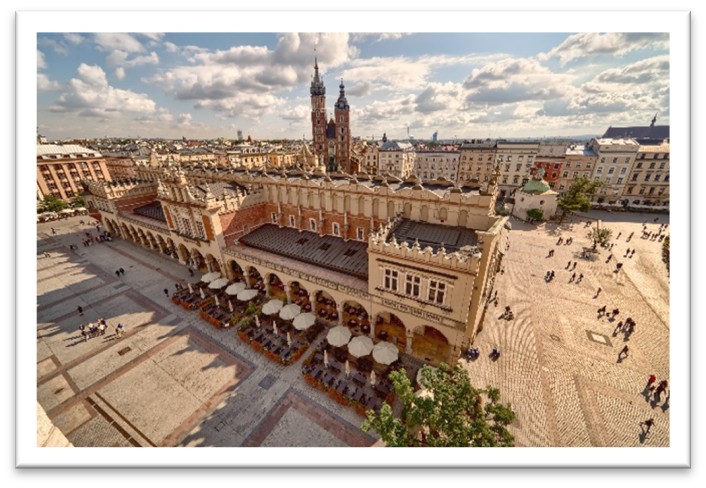
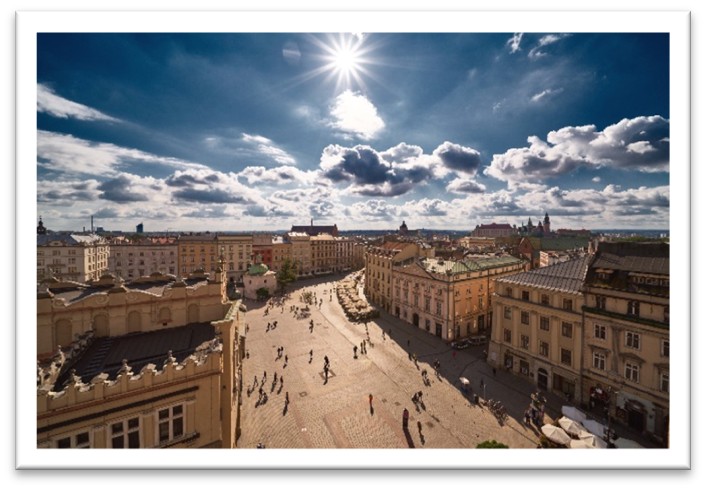
Photos by Piotr Krochmal